
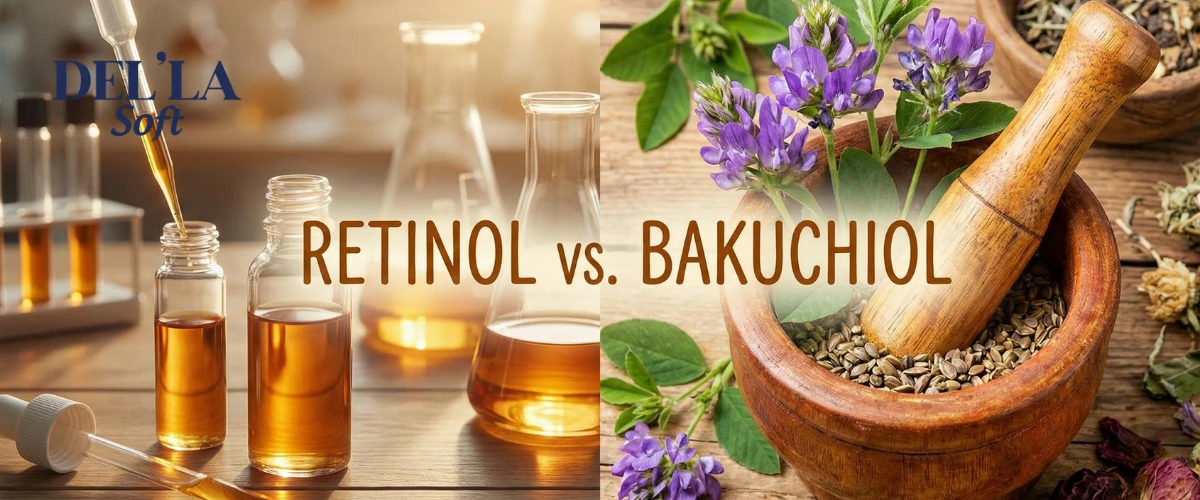
Retinol vs. Bakuchiol: The Ultimate Skincare Trends Guide for 2026
The skincare landscape is evolving faster than ever. For years, Retinol has been the undisputed gold standard in anti-aging. However, as we move through 2026, a shift towards barrier-friendly and sustainable ingredients has brought a powerful challenger to the forefront: Bakuchiol.
At TRUEDERM, we believe in accessible science. Whether you are a consumer building a routine or a brand owner looking to manufacture the next bestseller, understanding the clinical differences between these two powerhouses is essential.
This guide provides a definitive comparison of Retinol and Bakuchiol to help you make informed decisions for your skin and your product line.
What is Retinol and How Does It Work?
Retinol is a derivative of Vitamin A and is considered one of the most clinically proven ingredients in dermatology. It functions by communicating directly with skin cells, encouraging them to turn over faster and stimulating the production of fresh collagen.
Key Benefits of Retinol:
- Deep Wrinkle Reduction: Proven to smooth deep-set lines over time.
- Texture Refinement: Exfoliates at a cellular level for a "glass skin" finish.
- Acne Management: Highly effective at unclogging pores and preventing future breakouts.
However, Retinol is known for the "retinization" period—a phase where skin may experience redness, peeling, and sensitivity before adjusting.
What is Bakuchiol and Why is It Trending in 2026?
Bakuchiol is a plant-based extract derived from the seeds of the Psoralea corylifolia plant. Often marketed as "nature's retinol," it has gained massive popularity in 2026 due to the rise of the "clean beauty" and "skin barrier first" movements.
Unlike Retinol, Bakuchiol is not a Vitamin A derivative. However, clinical studies show it mimics the gene expression of Retinol, delivering similar anti-aging results without the associated irritation.
Key Benefits of Bakuchiol:
- Zero Irritation: Ideal for sensitive skin, rosacea, and eczema-prone skin.
- Sun Safety: Unlike Retinol, Bakuchiol does not increase UV sensitivity and can be used in the morning.
- Pregnancy Safe: A viable alternative for those who cannot use Vitamin A derivatives.
Comparison: Retinol vs. Bakuchiol for Product Development
For private label brands and skincare enthusiasts, choosing the right active ingredient depends on the specific skin goals. The table below outlines the functional differences.
|
Feature |
Retinol (Vitamin A) |
Bakuchiol (Plant Extract) |
|
Primary Mechanism |
Increases Cell Turnover |
Stimulates Collagen & Anti-Inflammatory |
|
Time to See Results |
Fast (4-6 weeks) |
Moderate (8-12 weeks) |
|
Side Effects |
Redness, Peeling (The Purge) |
None / Very Low |
|
Best For |
Oily, Acne-Prone, Mature Skin |
Dry, Sensitive, Reactive Skin |
|
When to Use |
Night Only (PM) |
Morning & Night (AM/PM) |
|
UV Sensitivity |
High (Requires SPF) |
None |
The Verdict: Which Ingredient Wins in 2026?
The "Retinol vs. Bakuchiol" debate isn't about one being better than the other; it is about matching the ingredient to the skin barrier's needs.
- For Maximum Potency: Retinol remains the superior choice for aggressive anti-aging and acne treatment. Modern manufacturing technologies now allow for encapsulated retinol, which releases slowly to minimize irritation.
- For Barrier Health: Bakuchiol is the winner for maintaining a healthy skin barrier while still targeting signs of aging. It fits perfectly with the "slow beauty" trend dominating 2026.
Frequently Asked Questions
Can I use Retinol and Bakuchiol together?
Yes. In fact, combining them is a growing trend. Bakuchiol's calming properties can help stabilize the skin, allowing it to tolerate Retinol better.
Is Bakuchiol really as effective as Retinol?
According to a significant study published in the British Journal of Dermatology, Bakuchiol showed comparable results to Retinol in reducing wrinkle surface area and hyperpigmentation, with significantly fewer reports of scaling and stinging.
Does Bakuchiol cause purging?
No. Because Bakuchiol does not accelerate cell turnover as aggressively as Retinol, it typically does not cause a purging phase.
Ready to scale your inventory without over-extending your capital?
Speak directly with the DEL’LA SOFT production team to evaluate our tiered MOQ private label manufacturing in Turkey and see how we can support your 2026 growth plan.
Visit www.dellasoft.net to request a quote and manufacturing timeline today.
DEL'LA SOFT is an ISO 22716 (GMP) certified cosmetic contract manufacturer based in Istanbul, specializing in premium hair care, beauty, and professional skincare solutions with a boutique 500-unit MOQ for UK, EU, and global brands. Our certified production infrastructure ensures full EC 1223/2009 and UK compliance for seamless market entry.